ADA Compliant Portable Toilets: Why 5% of Rentals Must Be Accessible
If you lease portable commodes long enough, you stop thinking about them as easy boxes dropped on a jobsite or occasion area. They become part of the public setting. People rely on them at wedding celebrations, road fairs, institution features, charity events, disaster response areas, church celebrations, and community festivals. When somebody can not utilize the toilet due to the fact that the device is too narrow, the threshold is as well tough, or there is no room to turn or move safely, the issue is not minor. It is immediate, personal, and avoidable.
That is why the requirement for accessibility matters so much in mobile hygiene. Under the 2010 ADA Requirements for Accessible Style, as analyzed by the Access Board and the Department of Justice, collections of portable single-user toilet units have to include easily accessible units. The regulation that catches many occupants off-guard is the 5 percent requirement. At the very least 5 percent of the systems in each collection need to come, and that applies also at momentary events.
For any person setting up an ada mobile bathroom leasing, that number is not a suggestion and not a politeness upgrade. It is the floor.
The 5% regulation is little on paper, yet important in practice
When people hear 5 percent, some think the requirement is very little enough to handle later. In real rental planning, that is where blunders begin. 5 percent sounds tiny till you equate it into actual systems. If a website has a collection of 20 mobile toilets, at the very least one need to come. If there are 40, at the very least 2 should be accessible. The factor is not simply mathematics. The point is that every cluster, not simply the occasion overall, has to be considered.
That last part issues more than many organizers recognize. I have seen plans where someone states, "We have one ADA unit on the property, so we're covered." That might really feel sensible on a map, but it misses out on just how people really relocate through a site. If the commodes are established in numerous separate collections, the accessible demand is tied to each cluster. A person must not have to travel across an entire fairground due to the fact that the only ada obtainable mobile bathroom was positioned near the major gateway while the closest bathroom bank to their seating location has no available option.
This is additionally why the Gain access to Board's interpretation for temporary events is so important. Momentary does not suggest exempt. A one-day festival still creates real obstacles if access is dealt with as optional. The very same is true for a weekend break sports tournament, a seasonal pumpkin spot, or a neighborhood block event that brings in rental restrooms for a few hours. Brief duration does not erase the need.
What "accessible" implies is more specific than "bigger system"
A typical misconception in the area is that any kind of oversize unit counts as an easily accessible one. That is not enough. An ada compliant portable bathroom or ada certified easily accessible mobile bathrooms need to fulfill access requirements, not just provide added square footage.
The verified criteria point to a number of technological attributes that matter. The system should give the called for clearances for the bathroom space itself. That includes transforming room, door maneuvering clearances, and suitable policies for grab bars and water-closet clearances. Simply put, the interior needs to help a person making use of a wheelchair or other movement aid, not just look roomier from the outside.
The entryway matters too. An ada handicap available portable toilet must have an accessible route and obtainable entryway. If ramps or touchdowns are required, those elements additionally need to abide by ADA technological needs. This is one of one of the most neglected parts of the setup. A compliant device can still become unusable if it is put on soft ground, at an awkward angle, or behind a lip or incline that prevents simple entry.
There is also an identification requirement. Easily accessible mobile commode units have to be noted with the International Symbol of Availability. That matters due to the fact that individuals need to not need to think which unit is meant to offer them. Excellent labeling is not aesthetic. It belongs to making gain access to functional in the real world.
Why the positioning of the unit can make or break compliance
A portable bathroom business can supply a completely developed ada compliant portable restroom, and the website can still produce troubles. This is where knowledgeable coordinators earn their keep.
Portable cleanliness typically gets designated late while doing so, after parking, fencing, stages, vendor tents, utility gain access to, and waste pickup courses are already mapped. Then someone tries to "fit in" the obtainable system wherever there is leftover space. That approach has a tendency to create the exact barriers the ADA is implied to prevent.
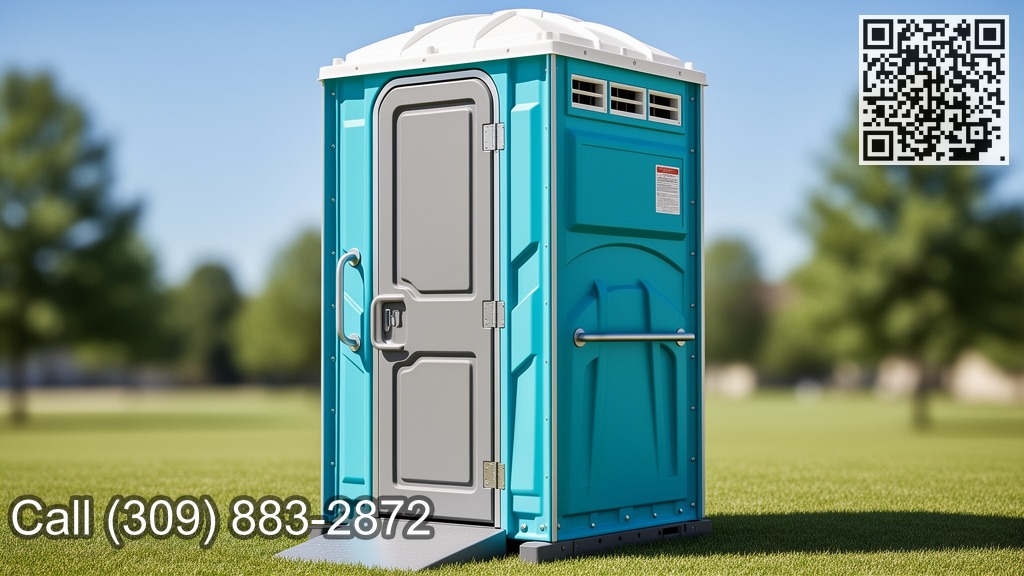
Picture a short-term event on a verdant field after rain. The typical devices are set near the side due to the fact that the service vehicle requires gain access to. The easily accessible system is practically existing, but it sits beyond a sloppy, uneven method. Or it is placed behind a row of crowd-control barriers that tighten the path. Or the only path to it cuts across loosened gravel. On paper, the website has an ada portable restroom. In method, a visitor with mobility restrictions gets to the area and still can not use it independently.
That is why accessible route and entryway demands are not side notes. They are central. The course to the device ought to be dealt with as component of the washroom itself. The same opts for the area in front of the door, the swing of the door, and any kind of ramp or landing that may be required. Access is not just about the shell of the bathroom. It includes the path to it and the capacity to go into and https://spencerfkat842.valiantfield.com/posts/ada-certified-portable-toilets-why-5-of-rentals-need-to-be-accessible navigate once there.
Temporary events are not also short-term for the ADA
This point deserves its very own section due to the fact that it is often the source of one of the most resistance. Event coordinators sometimes assume that a brief timeline alters the lawful expectation. It does not. The Access Board has made clear that the 5 percent accessible requirement relates to clusters of portable single-user bathroom systems also at temporary events.
That is a practical acknowledgement of how life works. Short-lived events are where many individuals come across mobile washrooms in the first place. Region fairs, ceremonies, food truck events, college graduation ceremonies, concerts in parks, holiday markets, race begin lines, and catastrophe healing websites all rely on short-term cleanliness. Omitting access from those settings would omit individuals from public and social life.
There is additionally a dignity concern right here that individuals really feel quickly. If a visitor arrives at an event and finds there is no usable toilet for them, the message is blunt. It states the occasion prepared for a group, yet not them. That is why compassionate preparation issues. A really obtainable setup is not only concerning conformity language. It has to do with participation.
The exception people misconstrue most
There is a narrow point in the verified context that typically obtains duplicated without enough treatment: portable bathroom systems at building and construction sites utilized specifically by building and construction employees were treated differently in the mentioned 1991 requirement. That exemption has actually led some people to talk as if portable commodes are extensively outdoors availability guidelines. They are not.
The distinction is restricted. For general mobile bathroom leasings, the obtainable device demand continues to be. So if a person is renting out systems for public usage, event usage, consumer use, or any kind of regular portable hygiene requirement outside that narrow context, the much safer and a lot more precise strategy is to assume the ease of access demand uses and plan accordingly.
This is among those locations where half-remembered guidance creates expensive mistakes. Someone listens to "building websites are exempt" and repeats it as "portable toilets are exempt." Those are not the exact same statement. Also within construction-related setups, details matter. The validated context supports just the narrow exception defined over, not a covering rule.
Why renters ought to ask better inquiries prior to shipment day
People typically consider a mobile bathroom leasing as a quantity choice. The number of typical devices do we require, and the number of hand-wash stations? Access needs a various type of discussion. Not longer, just smarter.
A renter need to be prepared to speak about where the commodes will certainly be organized, whether there are several collections, what the course to every collection appears like, and whether the easily accessible device will have a compliant path and entry. If the obtainable system needs ramps or touchdowns, those need focus early, not after the truck arrives.
This is where language matters also. Terms like ada compliant mobile bathrooms, ada-compliant mobile bathrooms, and ada mobile toilet needs are not simply marketing expressions. They should prompt details follow-up inquiries. Is the device understood the availability symbol? Has the website plan taken into consideration path gain access to? Is the cluster count driving the variety of obtainable systems, or is a person assuming one obtainable device for the entire property?
These conversations are typically uneasy only since they occur too late. When they happen at the planning stage, they are normally straightforward.
A practical example of exactly how the numbers work
Suppose a town closes numerous midtown blocks for a seasonal street event. The coordinator positions ten mobile toilets near the music stage, 10 near the food vendors, and 4 near the children's task area. It is tempting to think that one ada certified portable toilet someplace on site covers the requirement due to the fact that the complete matter is 24 and 5 percent of 24 is just over one.
That is not the right way to check out the policy. The demand relates to each collection. Because layout, the stage cluster needs an available unit, the food supplier collection needs an available unit, and the smaller sized collection near the youngsters's location should additionally be examined as its very own group. The rationale is basic. Access needs to exist where the washrooms are provided, not be combined in a remote corner of the event.
This is the type of concern that never appears in marketing makings, however it figures out whether guests can really utilize the facilities that were leased for them.
Accessibility is not a high-end add-on
In some rental discussions, the available device still obtains discussed as though it were a costs feature, like upgraded surfaces or a vanity sink. That framework is both inaccurate and purposeless. An ada compliant portable commode belongs to baseline accessibility when the criteria ask for it.
Treating availability as an add-on has a tendency to create 2 negative behaviors. The initial is waiting to see if the budget "permits" for it. The second is placing the obtainable unit in a low place due to the fact that the prime spots were appointed initially. Both practices lead in the wrong direction.
A more mature method is to build access into the initial draft of the sanitation strategy. When you do that, the rest of the logistics typically end up being easier. Courses are more clear. Cluster positioning is extra intentional. Signage and traffic flow make more feeling. You avoid the shuffle of attempting to retrofit gain access to in the final 24 hours.
The wider compliance environment is moving toward more analysis, not less
Even if a person wants to assume narrowly regarding mobile sanitation, the bigger conformity environment deserves observing. ADA needs are being imposed in a wider landscape throughout fields. The Division of Justice's 2026 support expanding the due date for certain state and city government internet and mobile accessibility guidelines to April 26, 2027 for larger entities is one example of that larger pattern.
That assistance has to do with digital availability, not mobile bathrooms. Still, it reflects something essential. Access conformity is not fading right into the background. It remains an energetic component of how companies are anticipated to serve the general public. For event organizers, communities, location drivers, and service providers, that means washroom availability ought to be seen as one item of a bigger compliance and incorporation picture.
The old behavior of treating accessibility as a niche concern is obtaining harder to defend. People are focusing, and they ought to be.
Where excellent purposes often drop short
Most ease of access failings in mobile toilet leasings are not the result of open hostility. They originate from assumptions.
One presumption is that a bigger unit needs to immediately be certified. An additional is that a person accessible unit someplace on website suffices. An additional is that short-term use softens the guidelines. One more is that shipment staffs can resolve course troubles on the fly once they show up. Those presumptions can all seem affordable in a rushed planning meeting, and all of them can create a setup that does not work.
The far better habit is to slow down at the appropriate moment. Not for hours, simply long enough to ask what accessibility will certainly appear like from the guest's perspective. Can the individual get to the system? Can they determine it? Can they enter it? Can they navigate inside it? Those are plain inquiries, yet they cut through an unexpected quantity of confusion.
A brief preparation check prior to you rent
If you desire one sensible screen for an ada mobile bathroom rental, utilize this prior to the order is settled:
- Count each bathroom cluster individually and apply the 5 percent easily accessible requirement to that cluster.
- Confirm the available unit is in fact certified, not merely oversized.
- Check that the path and entrance to the device will certainly come, consisting of any needed ramps or landings.
- Make sure the system will certainly display the International Sign of Accessibility.
- Review placement early sufficient that accessibility is constructed right into the website strategy, not improvisated on shipment day.
That checklist is straightforward, yet it covers the errors I see repeated most often.
The human side of the rule
Rules can begin to seem abstract when people speak only in percents and technical terms. The human fact is much easier to recognize. A restroom is not optional framework. At an occasion or public celebration, it influences whether people can remain, take part, function, volunteer, or enjoy themselves without anxiety.
For a moms and dad helping a grown-up child with a movement impairment, an easily accessible mobile toilet can be the difference in between participating in and staying home. For a professional making use of a wheelchair at a memorial event, it can imply the difference in between being welcomed and being sidelined. For an older adult whose balance is not what it once was, appropriate maneuvering space and a steady entry are not minor conveniences. They are what make independent usage possible.
That is why the 5 percent guideline is entitled to much more regard than it generally gets. It is a minimum that identifies a noticeable reality: if mobile washrooms are provided for the general public, some of those washrooms need to be accessible in each cluster where they are offered.
When organizers take that seriously, people observe, typically quietly. The event feels easier. The website really feels much more thoughtful. Guests spend less time problem-solving and more time getting involved. That is what great gain access to does. It eliminates rubbing before it becomes exclusion.
Getting it appropriate is normally less complex than fixing it late
The great information is that compliance right here is not strange. The bottom lines are clear. At least 5 percent of systems in each collection need to be accessible. Short-term events are consisted of. Obtainable systems have to be related to the International Icon of Availability. They should have an obtainable course and entrance, and any type of required ramps or touchdowns have to fulfill ADA technical needs. The systems themselves must please the appropriate toilet-room technological regulations, consisting of clearances, transforming area, and suitable grab-bar and water-closet requirements.
That might appear technical, but in technique it comes down to care, intending, and a desire to believe from the individual's perspective. If you are renting out ada compliant mobile restrooms for an occasion or public-facing site, ease of access needs to be cleared up as early as amount, maintenance, and placement.
People hardly ever keep in mind the mobile toilets at a well-run occasion, which is normally an excellent sign. It suggests the centers worked, people discovered them, and no one had to negotiate unnecessary barriers simply to fulfill a standard need. For available guests, that ordinary experience is precisely the point.
 Ask ChatGPT
 Ask Grok
 Ask Perplexity
 Ask Claude
 Ask Google AI
 Ask You