ADA Mobile Toilet Needs and Accessibility Recognition Discussed
Portable washrooms often tend to be treated as a final line item, right up till a person arrives on website and can not use the centers. That is typically when the actual price of inadequate planning shows up, not just in aggravation, however in exemption. If you take care of occasions, public projects, church functions, parks, school activities, emergency situation reaction sites, or any kind of location where an ada portable commode is part of the plan, availability can not be an afterthought.
I have seen this issue misconstrued in 2 different ways. Often individuals presume that leasing one bigger unit instantly addresses every little thing. Other times they concentrate on the unit itself and forget the path to it, the ground around it, the signage, or the method the door in fact functions once it is supplied and placed. The ADA does not treat access as a sticker label on the side of a toilet. It treats it as functional access.
That distinction matters. A toilet can be marketed as an ada easily accessible mobile restroom or an ada compliant mobile commode, yet still fall short in method if it is put on an inaccessible surface, blocked by crowd barriers, or embeded in a cluster without any correct accessible identification. The purpose of this short article is to make the government demands simpler to recognize without flattening them into oversimplified sales language.
The rule that controls portable restroom accessibility
For portable commode services in the USA, the managing government ease of access criterion is the 2010 ADA Specifications for Accessible Style, as interpreted by the U.S. Gain Access To Board and the Department of Justice. That is the standard structure individuals ought to be using when they talk about ada mobile toilet requirements.
This is where some complication begins. Vendors, coordinators, and site managers often utilize terms like ada certified portable restrooms, ada-compliant mobile bathrooms, or ada handicap available portable bathroom reciprocally. In common discussion, that is easy to understand. In method, though, the tag matters much less than whether the setup really lines up with the ADA standards.
The government standard does not stop at the concept that an easily accessible portable system must exist someplace on the residential property. It resolves the amount of available units are required in a cluster, how those systems are recognized, and whether an individual can come close to, get in, and use them. That indicates compliance is both concerning quantity and usability.
If you are organizing an ada mobile toilet rental for the public or for program participants, the safer way of thinking is basic: do not ask only, "Did we rent an easily accessible unit?" Ask, "Can a person that requires it discover it, reach it, enter it, and use it with self-respect?"
How numerous accessible units are needed in a portable toilet cluster
One of the clearest guidelines in this area is the 5 percent need. For clusters of mobile single-user commode units, at least 5 percent of the devices in each collection must be accessible. The Gain access to Board has actually made clear that this applies even at short-term events.
That factor is very easy to miss out on because short-term websites frequently get treated as if they operate under looser expectations. They do not. A weekend event, a seasonal reasonable, a https://devinaxsq635.rivetgarden.com/posts/selecting-an-ada-available-portable-restroom-rental-for-public-use community fundraising event, or a short-term field workplace might be short in period, yet the availability commitment does not go away since the setup is temporary.
The word "collection" is also essential. It is not enough to look throughout a whole large property and state there is one obtainable unit someplace. The need applies to each collection of portable single-user devices. If your site has numerous restroom groups spread across a place, each organizing must be examined on its own.
This is where skilled preparation helps. A website can appear compliant theoretically and still develop obstacles in the real world if the obtainable systems are concentrated as well far where individuals are actually collecting. The federal rule in the verified context speaks with the cluster need. Good judgment goes one step further and asks whether the positioning supports useful access for individuals expected to utilize the site.
Temporary events are not a free pass
This is just one of one of the most typical false impressions I listen to. Individuals presume availability standards loosen up when the restrooms are on trailers, provided for a weekend break, or placed for an one-time public occasion. The Gain access to Board's analysis states or else. The 5 percent accessible-unit regulation applies even at short-term events.
That matters for planners who are juggling permits, crowd flow, sanitation, waste solution, and a long listing of supplier deadlines. It is simple to deal with the toilet order as a commodity acquisition. But once participants of the general public are involved, specifically in a momentary event setup, accessibility should be reviewed early, not at the end.
I have actually seen the practical difference this makes in public-facing procedures. When accessibility is taken into consideration early, the positioning generally functions much better for everybody. Paths are more clear. Lines up are much less disorderly. Personnel are not rushing to relocate secure fencing or plywood after complaints been available in. The event feels more welcoming since it is extra usable.
By comparison, when a person orders a bank of common units and tries to resolve availability on shipment day, the solutions are typically unpleasant or incomplete. An ada certified portable toilet can just do its job if the bordering setup appreciates the same requirement of access.
Identification is required, not optional
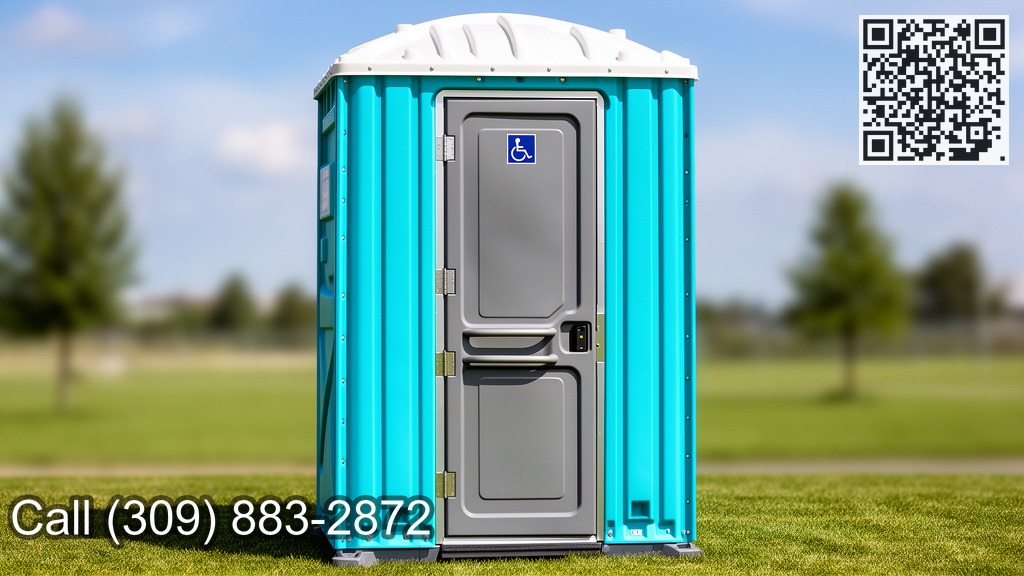
Accessible portable toilet units have to be identified with the International Symbol of Availability. That requirement is straight, and it offers a sensible function. A person searching for the obtainable system must not need to inspect each bathroom one by one or ask staff for help.
This seems basic, yet it obtains forgotten surprisingly often. At active sites, especially when units are organized rapidly, labels might be obscured, missing out on, or put where they are tough to spot. Sometimes the unit is technically the easily accessible one, however nothing in the line of bathrooms makes that clear from a range. That creates complication and can require unnecessary communications that many people prefer to avoid.
Identification does more than satisfy a formal guideline. It sustains freedom. Great accessibility design reduces the quantity of additional initiative a person has to invest just to do what everybody else is doing.
If you are evaluating ada certified available mobile bathrooms, this is just one of the most convenient details to inspect aesthetically. Is the system plainly noted with the International Icon of Access? If the solution is no, the installment is missing out on a called for piece.
The course to the system matters as high as the system itself
A great deal of conformity problems have nothing to do with the washroom interior. They begin outside. Mobile obtainable devices have to have an easily accessible path and entrance, and any needed ramps or touchdowns should adhere to ADA technical requirements.
This is where ease of access often breaks down in the field. The unit obtains delivered correctly, but it is positioned on soft ground after rain, at the edge of a high strategy, beyond an aesthetic without any certified change, or behind short-term obstacles that tighten the path. Theoretically, the website has an ada portable restroom. In operation, it does not.
The path is not a side issue. If someone can not reach the system without crossing unpredictable ground or working out a hard to reach strategy, the accessible function inside the restroom comes to be pointless. Ease of access begins prior to the door.
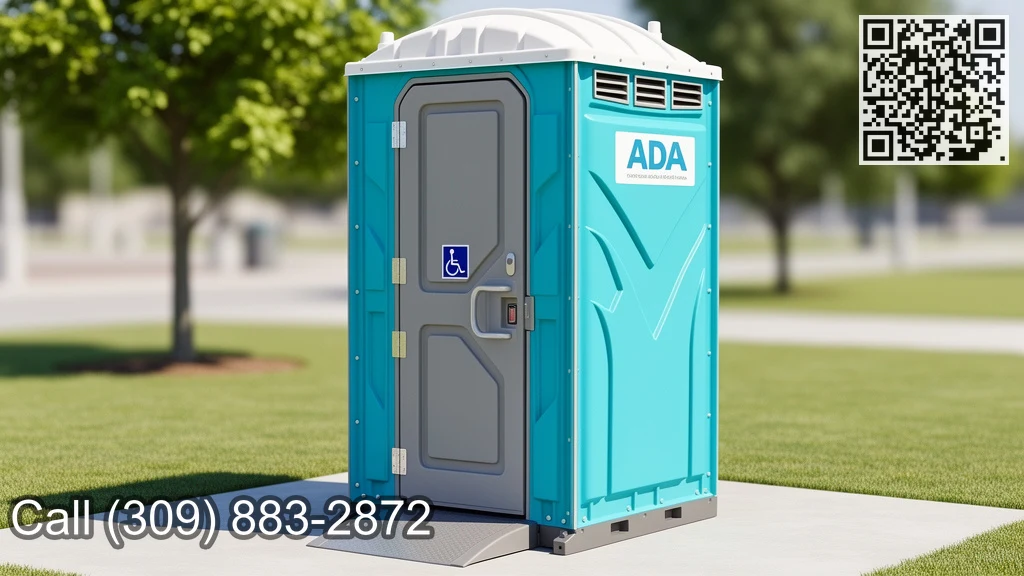
For short-term sites, this implies looking meticulously at where the restroom cluster is being put. A tough, secure setup location and a functional course of traveling are not luxuries. They belong to what makes an ada-compliant mobile toilet actually obtainable in practice.
The entrance matters too. If a ramp or touchdown is necessary, those elements must satisfy ADA technical demands. The validated context does not provide precise dimensions, so I will not invent them right here. The essential point is that availability is not pleased by improvisating a makeshift board, a high system, or a sloppy spot that team think is "adequate for eventually." If a ramp or landing is required, it needs to comply.
Inside the unit, technical requirements still apply
Portable devices are mobile, however they are still toilet spaces for ADA objectives. The systems should meet toilet-room technological demands, consisting of component clearances, transforming area, and door maneuvering clearances, along with relevant grab-bar and water-closet clearance rules.
This is why a larger impact alone is not nearly enough. Individuals occasionally assume that if a mobile restroom looks roomier than a common system, it should be compliant. That is not a safe presumption. Additional indoor area is not the very same thing as the called for clearances and steering conditions.
Door handling can be specifically disclosing. An unit might be marketed as obtainable, yet if the method the door functions or the surrounding positioning interferes with useful usage, the benefit of the larger unit is minimized. The very same chooses transforming space and the placement of indoor attributes. Availability depends upon just how the entire room works together.
This is one factor that experienced customers do not depend only on product tags. They validate that the unit being offered is planned to satisfy ADA-accessible usage and then see to it the provided arrangement does not undermine that design. For anybody keywords like ada compliant mobile commode or ada certified portable bathrooms, that is the genuine issue. Conformity is about problems of usage, not simply a classification name in a rental catalog.
The exception individuals misread on building sites
Construction setups develop a frequent location of complication. The ADA Standards distinguish portable toilet devices at building and construction websites used exclusively by building and construction employees, and the cited 1991 typical includes an exemption from the portable-toilet ease of access scoping demand for those devices. That is a slim point, and it must not be stretched past what it says.
The key phrase is utilized exclusively by building employees. People often listen to there is a construction-related exception and then assume mobile toilets at any kind of energetic jobsite do not require to be accessible. That is too wide. The validated context supports only the minimal distinction explained above.
For general mobile commode leasings, the accessible-unit requirement continues to be. So if the website problems or public usage step outside that slim construction-personnel-only context, it is high-risk to lean on the exemption delicately. This is just one of those areas where overconfidence causes preventable mistakes.
In practical terms, if a website is public-facing, mixed-use, or offering participants past building and construction crews, it is wise to review it under the basic accessibility requirement instead of presuming a covering exemption exists. The confirmed realities sustain a slim exemption, not a general getaway hatch.
What to validate before shipment day
A brief evaluation prior to the vehicle arrives can stop most availability failures. You do not need a significant process, yet you do need to look past the rental order itself.
- Confirm that each collection of portable single-user commodes consists of at least 5 percent accessible units.
- Verify that the obtainable unit will be related to the International Icon of Accessibility.
- Check that the placement allows an obtainable course and available entrance.
- If ramps or landings are needed, see to it they are planned to follow ADA technological requirements.
- Ask whether the device offered is designed to fulfill applicable toilet-room technological demands such as turning space, fixture clearances, door navigating clearances, and grab-bar and water-closet rules.
That list is easy on purpose. Many real-world failures happen because one of those essentials is skipped, not due to the fact that the regulation itself is impossible to understand.
Why the ease of access symbol deserves even more attention
The recognition requirement can appear small compared with path gain access to or indoor clearances, yet it deserves its own interest since it affects usability in crowded, time-sensitive environments. At a jam-packed fairground, roadside emergency situation arrangement, or huge outside wedding event, individuals are not reading rental requirements. They are checking the restroom row and making quick decisions.
Clear recognition with the International Icon of Access reduces anxiety and guesswork. It also aids event staff direct participants without turning accessibility into a public conversation. For several customers, that issues. Individuals should not need to discuss their requirements just to situate a restroom.
There is another useful advantage. Visible recognition assists shield the obtainable system from becoming just another general-use delay in the eyes of the crowd. It does not eliminate misuse, however it improves clearness. At high-traffic occasions, clearness is valuable.
If your supplier markets ada compliant available portable bathrooms, this is one of the most noticeable indicators that the setup has actually been analyzed. It is not the only indication, however it is a vital one.
Common planning blunders that create noncompliance
The errors I see frequently are not remarkable. They are regular oversights made under time stress. A device shows up with the best tag, however the collection count is wrong. The matter is right, yet the accessible device is put at the far side of harsh ground. The course serves in completely dry climate, after that becomes tough after a storm. The symbol is present when loaded, then concealed after website fence is installed.
A second pattern is the presumption that the rental business alone carries the whole compliance burden. In reality, positioning and site problems are commonly controlled by the client, coordinator, service provider, or building manager. A company might provide an ada obtainable mobile bathroom, however if the getting celebration puts it in a location without an obtainable path, the result still stops working the user.
This is why obligation requires to be talked about plainly prior to arrangement. That is selecting the precise place? That is examining the path? That is making certain the indicator remains noticeable? Those are functional concerns, yet they are straight connected to accessibility.
Accessibility belongs to a broader conformity culture
A beneficial method to think about this topic is that washroom ease of access rests inside a much wider ADA conformity environment. In 2026, the Department of Justice provided support extending the target date for sure state and city government internet and mobile ease of access rules to April 26, 2027 for bigger entities. That details support has to do with electronic accessibility, not mobile commodes. Still, it mirrors a bigger truth: ADA conformity is active across sectors, and companies are being asked to take note in even more areas, not fewer.
That broader context matters because it transforms exactly how access needs to be come close to internally. Groups that still treat ADA problems as periodic formalities are falling back. Whether the topic is an internet site, a mobile service, a center entry, or an ada mobile toilet, the pattern coincides. Accessibility assumptions are real, ongoing, and interconnected.
From an administration perspective, this is in fact valuable. It means toilet ease of access need to not be isolated as a specialty concern that only shows up throughout major public events. It belongs inside normal planning, purchase, procedures, and risk review.
How to talk with vendors without getting shed in advertising and marketing terms
Portable bathroom suppliers commonly use a mix of expressions: ada certified portable restroom, ada-compliant portable commode, ada certified mobile commodes, or comparable phrasing. Those labels can be valuable starting points, yet they must cause certain questions.
Ask what accessible units are being supplied for each collection. Ask exactly how the unit is identified. Ask whether the device is planned to fulfill the suitable technical requirements for available toilet areas. Then match those response to your actual website conditions, since the delivered environment matters equally as high as the product itself.
These are the discussions that generally generate far better outcomes:
- How numerous complete single-user devices will certainly remain in each collection, and how many of those will certainly be accessible?
- How will the available device be determined on site?
- What does the supplier need from you to protect an available path and entrance?
- Will ramps or landings be required based on your placement plan?
- Who will validate the final configuration after delivery?
You can have those conversations in 10 mins, and they usually stop the issues that would certainly or else eat hours later.
The objective is dignity, not just technological compliance
The language around ADA needs can really feel completely dry, yet the lived influence is not. A bathroom is standard infrastructure. When it is inaccessible, the message received by the individual is immediate and individual. You can be right here, yet not totally. You can attend, however just with extra effort. You can participate, however just if someone else assists you navigate something every person else can do alone.
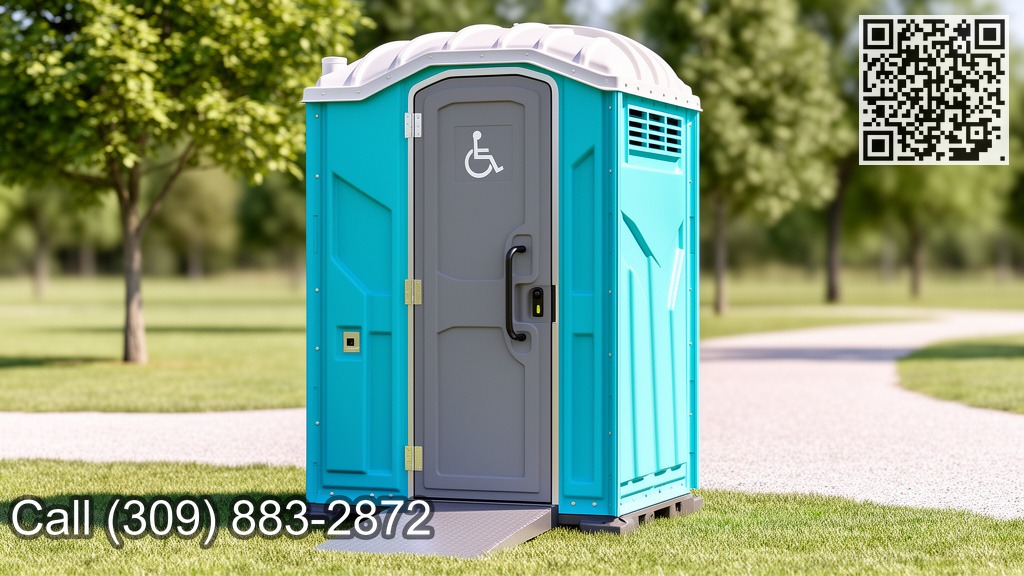
That is why this subject should have treatment. An ada mobile commode is not merely a larger box supplied to a site. It is part of whether an area is absolutely usable. The 2010 ADA Criteria, the 5 percent cluster need, the need for easily accessible identification, the available route and entry, and the technical guidelines for the toilet area itself all collaborate towards one useful end result: a person that requires the accessible device can actually make use of it.
When organizers comprehend that, the decisions improve. The rental order boosts. The positioning enhances. The website experience enhances. And what could have been an avoidable obstacle comes to be something much more basic and more humane, which is precisely what available style is meant to accomplish.
 Ask ChatGPT
 Ask Grok
 Ask Perplexity
 Ask Claude
 Ask Google AI
 Ask You